
AI Photo Editing Still Has a Long Way to Go: My Latest Real-World Test
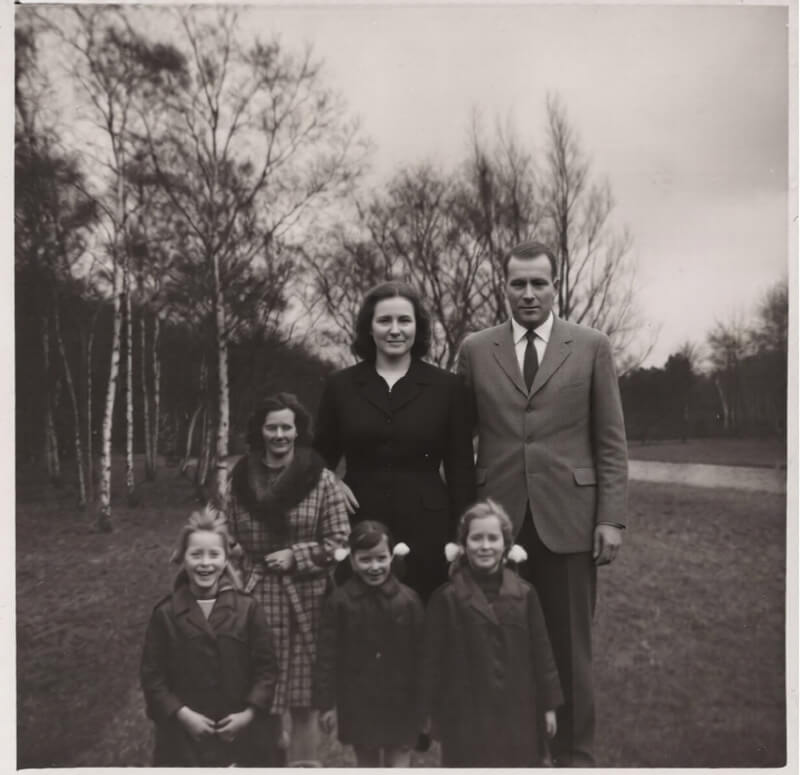
Artificial intelligence continues to dominate discussions in the photo editing industry. Every few months, new AI-powered image editing platforms appear, promising faster workflows, automatic retouching, and professional-quality results with minimal effort.
As someone who works professionally in photo retouching and photo restoration, I’ve been following the development of AI photo editing closely for years. I’ve already written several articles on the subject, testing different AI editing tools and comparing them to traditional professional retouching workflows.
After my previous experiences testing AI image editing, I decided to continue my research — this time using a platform that specifically marketed itself as an AI photo editing service designed for professional image manipulation rather than a general AI assistant.
I deliberately chose not to use ChatGPT for this test because, while it is extremely impressive in many areas, it is not a dedicated professional photo editing platform. Instead, I wanted to evaluate AI software built specifically for photo editing and retouching services.
Unfortunately, the results once again highlighted many of the current limitations of AI image editing.
The AI Photo Editing Task
The editing request itself was actually very simple.
I had:
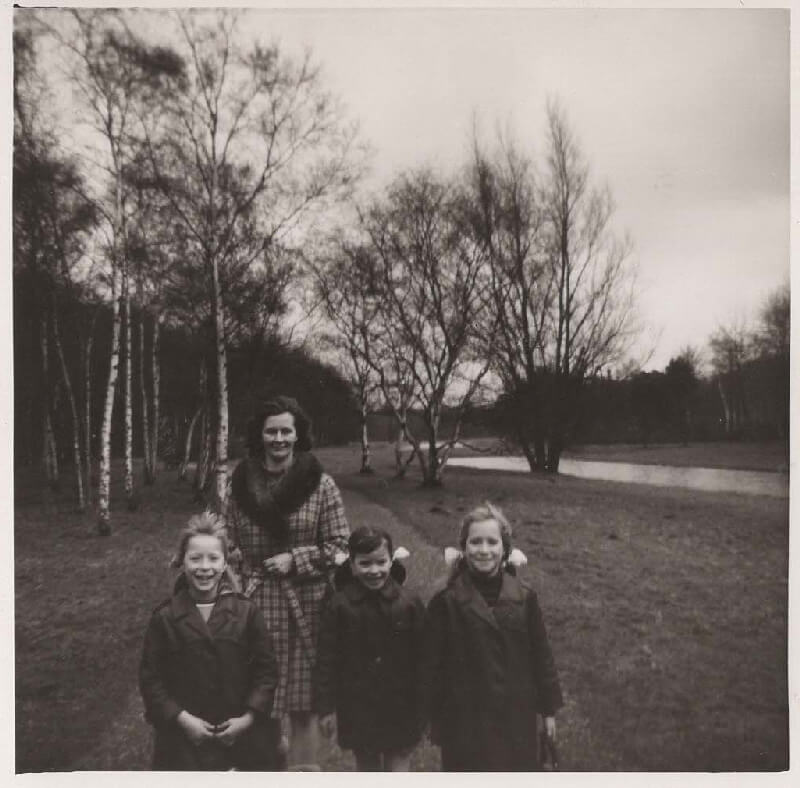
- A photograph of a woman standing behind three children
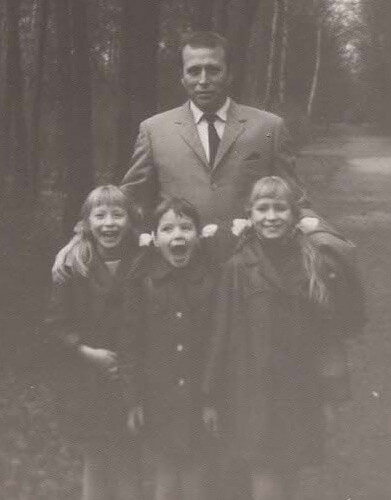
- A separate image containing a man
The goal was straightforward:
Add the man naturally into the main image so that he appeared standing next to the woman behind the children.
My exact instruction to the AI platform was:
“Please add the man from the smaller image to the image of the lady behind the 3 children. Place the man next to the woman, also behind the children.”
This is the type of task that professional photo editors and retouchers perform regularly using tools such as Adobe Photoshop.
From a human retouching perspective, the requirements are obvious:
- Match the scale correctly
- Preserve realistic proportions
- Maintain facial accuracy
- Blend lighting and perspective naturally
However, the AI-generated result was surprisingly poor.
The First AI Editing Failure: Incorrect Proportions
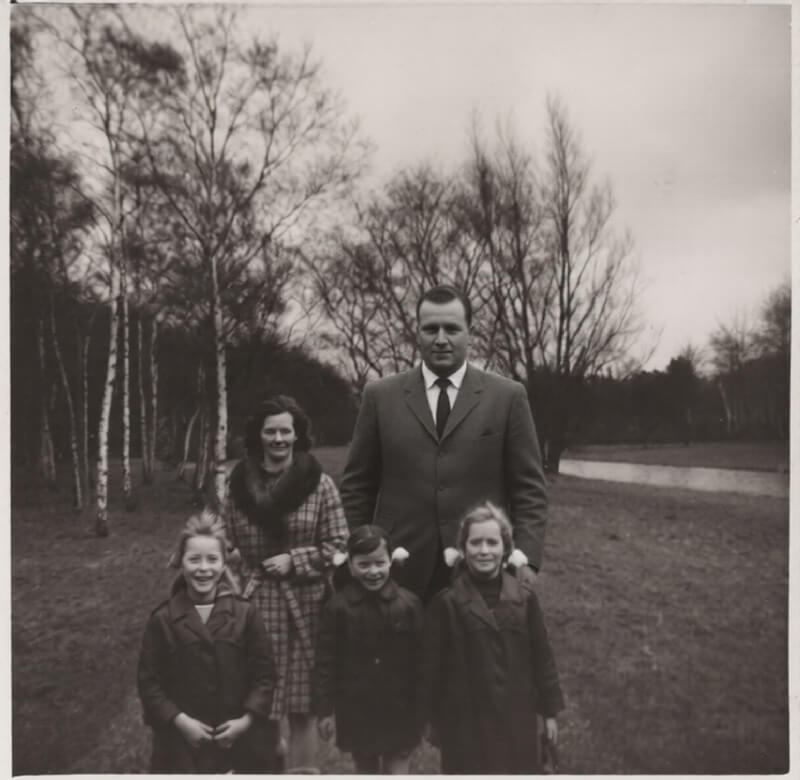
Although the AI successfully added the man into the image, the proportions were completely wrong.
The inserted figure was significantly larger than the woman standing beside him, making the composition look unnatural immediately.
Even more concerning, I noticed that the AI had subtly altered the man’s face during the editing process. Rather than preserving his original appearance accurately, the system appeared to “reinterpret” parts of his facial features.
This is one of the recurring problems I continue to encounter when testing AI photo editing software:
AI often generates approximations rather than precise edits.
For casual social media use this may not always matter, but for professional work — especially family photographs, wedding photography, or historical restoration — accuracy is extremely important.
Attempting to Correct the AI Edit
I then uploaded the edited image again and gave a much more specific instruction:
“Please adjust the size of the man to be proportionate to the woman.”
This should have been a relatively simple correction.
However, after processing the image again, there was virtually no visible improvement at all. The proportions still looked incorrect, and the edit remained unrealistic.
This highlighted another common weakness in current AI photo editing systems:
poor responsiveness to corrective instructions.
Even when given clear feedback, many AI editing platforms struggle to refine or precisely adjust previous edits.
Testing a Second Dedicated AI Photo Editing Platform
To compare results, I decided to test a completely different AI photo editing service.
Unfortunately, the outcome was even worse.
This time, the AI not only added the man incorrectly, but it also duplicated the woman already present in the original image.
The result looked chaotic and unusable.
Instead of understanding the structure of the photograph and the relationships between the subjects, the AI appeared to generate entirely new visual elements based on assumptions rather than careful analysis.
This is a major issue with many current AI editing tools:
they often prioritise generation over precision.
Why AI Still Struggles With Complex Photo Editing
Through my ongoing testing of AI image editing tools, several consistent limitations continue to appear.
1. Poor Spatial Awareness
AI often struggles to understand:
- Perspective
- Relative scale
- Subject positioning
- Realistic proportions
This leads to edits where people appear unnaturally large, small, or incorrectly placed within the scene.
2. Facial Alteration Problems
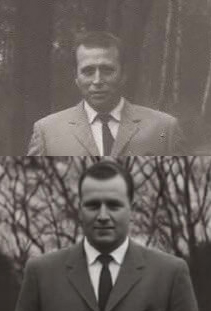
One of the most concerning issues is that AI frequently alters facial details unintentionally.
Rather than preserving the exact likeness of a person, AI systems often “rebuild” faces based on learned patterns.
This can subtly change:
- Expressions
- Facial structure
- Eye shape
- Skin texture
For professional retouching and restoration work, this lack of accuracy is a serious problem.
3. Weak Instruction Following
Even with very clear prompts, AI platforms often fail to perform precise corrections.
Simple instructions such as:
- “Do not crop”
- “Keep proportions realistic”
- “Only adjust size”
are frequently ignored or only partially applied.
4. AI Prioritises Generation Over Precision
Many AI systems are designed to create visually plausible images rather than technically accurate edits.
This works reasonably well for:
- artistic image generation
- concept art
- quick social media visuals
But professional photo editing requires:
- control
- consistency
- accuracy
- restraint
These are still areas where experienced human retouchers outperform AI tools.
AI Photo Editing vs Professional Retouching
Artificial intelligence is improving rapidly, and there are areas where AI editing tools are genuinely useful.
For example:
- simple object removal
- automatic selections
- quick mock-ups
- basic background cleanup
AI can speed up certain workflows significantly.
However, in more advanced editing tasks — especially when dealing with people, family photographs, weddings, or sentimental images — human judgment still plays a crucial role.
Professional retouching is not simply about generating pixels.
It’s about understanding:
- composition
- anatomy
- lighting
- realism
- emotional importance
This is why professional photo retouching services still offer a level of precision and reliability that AI currently cannot consistently match.
Final Thoughts on AI Photo Editing
My latest AI editing tests once again showed that while AI can sometimes produce impressive results, it still struggles with tasks that require precision, realism, and accurate human representation.
In both tests:
- proportions were incorrect
- facial details were altered
- instructions were poorly followed
- compositions became unrealistic
For now, AI photo editing remains best suited as an assistant tool rather than a replacement for professional retouching workflows.
As AI technology continues to evolve, I’ll continue testing new platforms and sharing real-world results here on my blog.
If you would like to see examples of professional manual retouching and restoration work, you can visit my homepage here: