
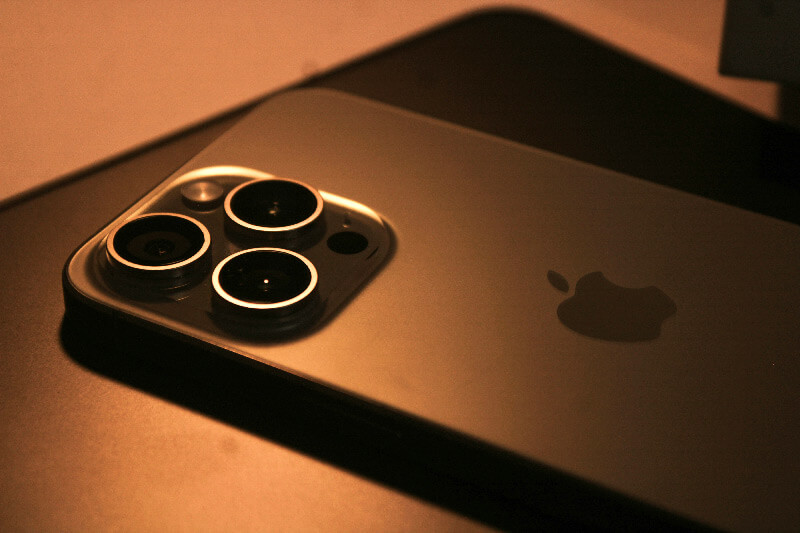
Professional camera vs phone camera
Every time a new smartphone launches, we hear the same claims:
“This camera is now as good as a professional DSLR.”
“You no longer need a professional camera.”
“Wedding photographers will soon be replaced by phones.”
As a professional photo retoucher who works on everything from wedding images to damaged family photographs, I can confidently say this:
No, your mobile phone is still not as good as a professional camera—even if you own the latest iPhone or Samsung Galaxy.
That is not to say modern smartphones are bad. In fact, they are incredibly impressive pieces of technology and can produce fantastic images in the right conditions. But when it comes to image quality, flexibility, retouching potential, and professional use, there is still a very large gap between a phone and a dedicated professional camera such as the Canon EOS R5 or high-end Sony Alpha series cameras.
And as a retoucher, I see the difference every single day.
Why Smartphone Photos Look Good (At First)
Modern phones rely heavily on something called computational photography.
Rather than relying purely on optics and sensor quality, phones use software and artificial intelligence to improve images automatically.
This includes:
- Artificial sharpening
- HDR processing
- Noise reduction
- AI skin smoothing
- Sky enhancements
- Simulated background blur (portrait mode)
At first glance, photos often look bright, sharp, and highly polished.
But there is a catch.
The moment you zoom in, print large, or attempt professional retouching, the limitations quickly become obvious.
Sensor Size Matters More Than Marketing
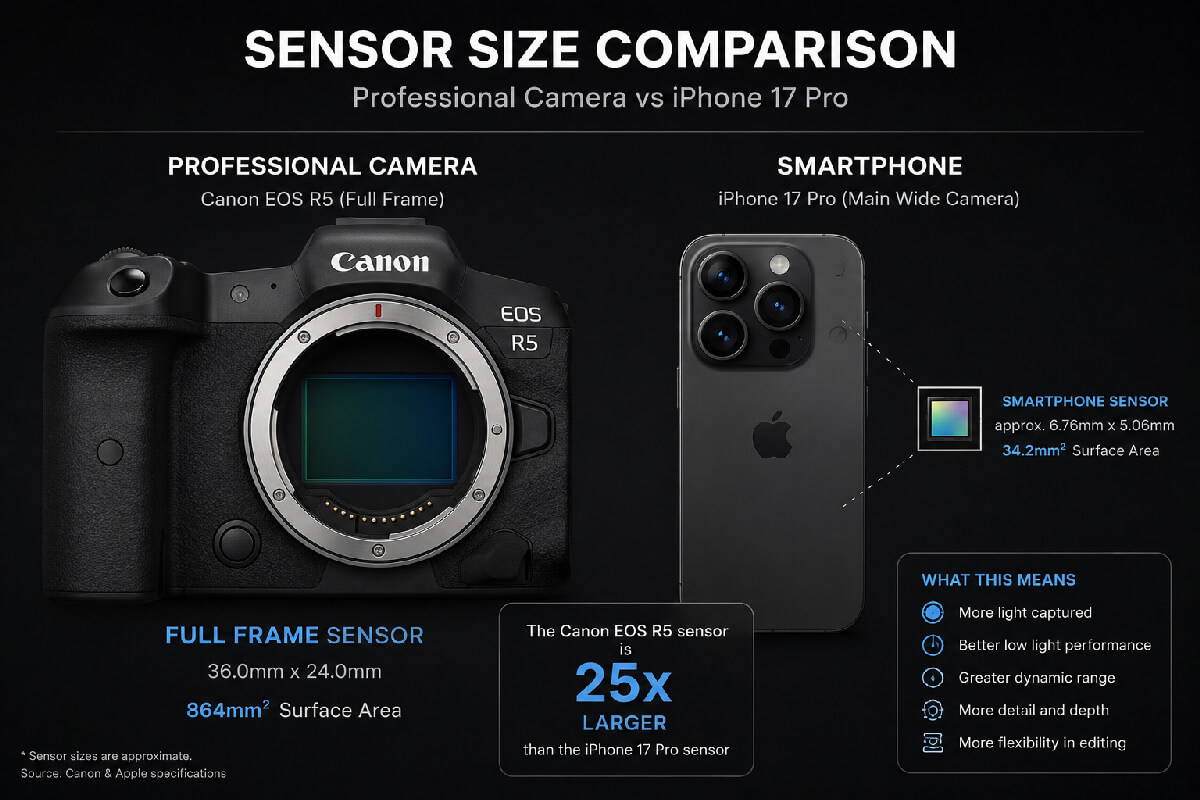
One of the biggest differences between a smartphone and a professional camera is sensor size.
A phone sensor is tiny compared to a camera like the Canon EOS R5 or a professional Sony mirrorless camera.
Why does this matter?
Larger sensors capture:
✔ More detail
✔ Better colour depth
✔ Superior dynamic range
✔ Cleaner shadows
✔ Better low-light performance
✔ Less digital noise
When I retouch images, this difference becomes immediately noticeable.
Professional camera files contain significantly more usable information, allowing for:
- Better skin retouching
- Cleaner sharpening
- Colour correction without image breakdown
- Better recovery of highlights and shadows
Phone images often start to fall apart very quickly during editing.
Especially wedding images.
The Lens Problem: Phones Cannot Replace Professional Glass
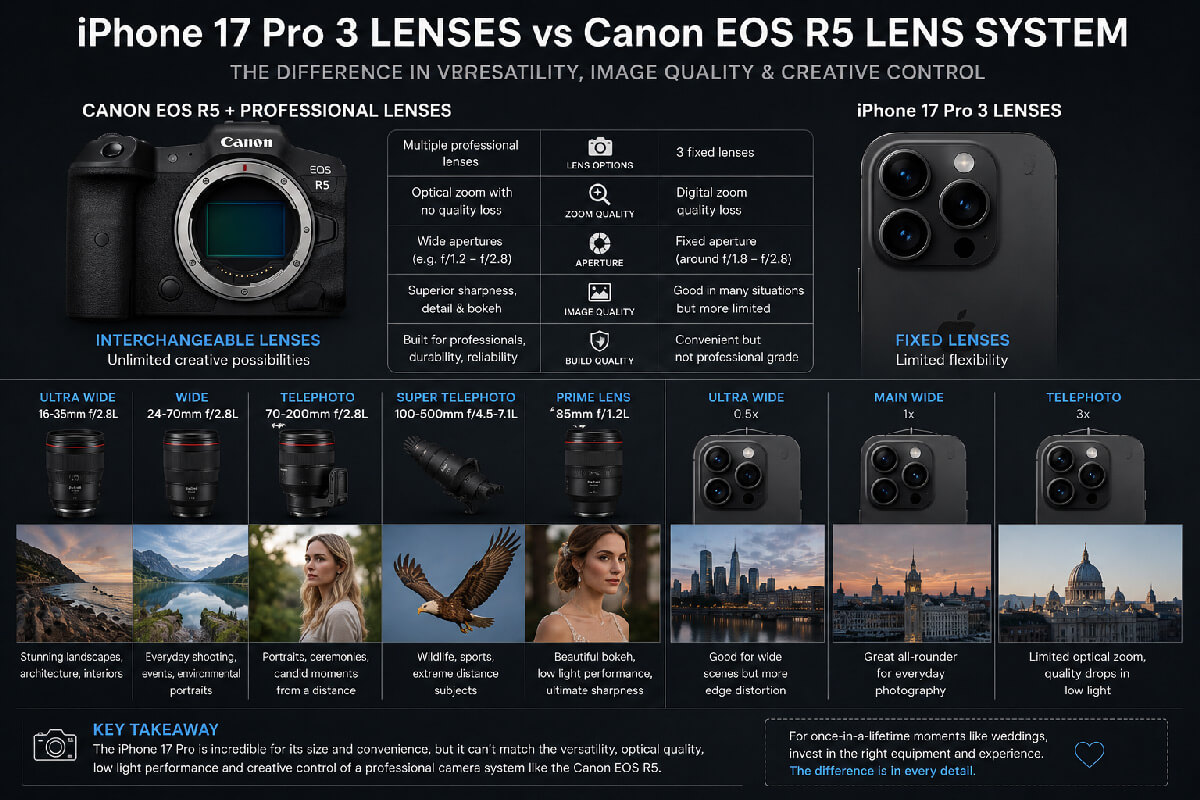
Another major issue is lenses.
Smartphones may advertise multiple cameras, but they still cannot compete with dedicated professional lenses.
A wedding photographer, for example, may carry:
- Wide-angle lenses
- Fast portrait lenses
- Telephoto zooms
- Low-light prime lenses
These lenses are designed for very specific purposes.
A professional 85mm portrait lens creates beautiful background separation naturally—not artificially.
A fast 24–70mm lens allows flexibility throughout the day.
Meanwhile, phones often rely on digital cropping and software tricks to imitate professional depth of field.
Sometimes it looks convincing on a small screen.
But not always once enlarged or professionally edited.
RAW Files: The Hidden Difference Most People Never Think About
One of the biggest misconceptions I hear is:
“But my phone shoots RAW.”
Technically, yes—many premium smartphones now allow RAW capture.
However, smartphone RAW files are still nowhere near the quality of files produced by professional cameras.
A professional camera RAW file contains significantly more data.
This means:
- More editing flexibility
- Better recovery of blown highlights
- Cleaner shadows
- Superior colour grading
- More accurate skin tones
As a professional wedding photo retoucher, I often have to explain to clients why images from phones simply do not retouch as well as files from dedicated cameras.
You can only work with what exists in the image.
If the detail is not there to begin with, no amount of Photoshop can magically recreate it.
Wedding Photography: Where the Quality Difference Becomes Huge
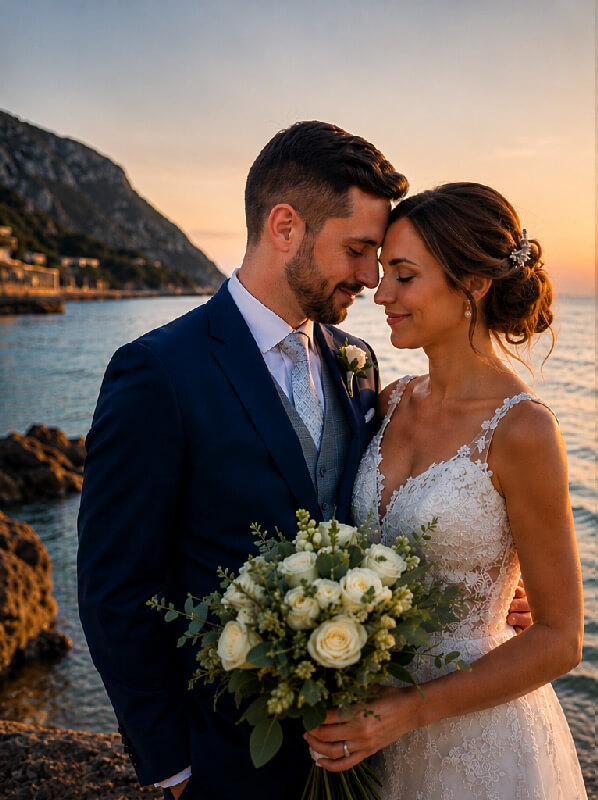
Title: why professional cameras are better
InformationA side by side comparison of a professional camera vs phone camera
This is one of the biggest areas where problems arise.
Many couples understandably want to save money and may hire photographers based on price alone—or assume modern cameras are all the same.
But image quality matters enormously.
Wedding days are often:
- Fast-moving
- Poorly lit
- High contrast
- Emotionally important
- Impossible to recreate
Professional cameras perform dramatically better in difficult situations like churches, receptions, candlelight, speeches, and dance floors.
I have had countless occasions where people come to me asking if I can “fix” wedding photographs that were taken on poor equipment or heavily compressed.
Unfortunately, there are limits.
Low-quality files often suffer from:
- Soft focus
- Digital noise
- Poor dynamic range
- Harsh sharpening
- Missing detail in faces
- Overprocessed skin
And once detail is gone, it cannot always be brought back.
This is one reason I always recommend checking what equipment a photographer uses before booking them.
You can read more advice here on choosing the right wedding photographer:
While great photographers can absolutely create amazing work with modest gear, having professional equipment provides consistency, reliability, and better image quality—especially in challenging lighting conditions.
Low Light: Smartphones Still Struggle
Phones have improved enormously in low light, but they still rely heavily on software processing.
This often results in:
- Smudged detail
- Artificial sharpening
- Watercolour-like textures
- Strange skin rendering
Meanwhile, cameras such as the Canon EOS R5 and Sony professional series can maintain detail, colour, and clarity in extremely challenging environments.
As someone who regularly retouches low-light wedding and event photography, the difference remains substantial.
Are Smartphones Useless? Absolutely Not
Smartphones are brilliant for:
✔ Holidays
✔ Social media
✔ Quick family moments
✔ Everyday photography
✔ Behind-the-scenes content
They are incredibly convenient and surprisingly capable.
But they are still not replacements for professional cameras when image quality truly matters.
Especially when those images are once-in-a-lifetime memories.
Final Thoughts: The Right Tool for the Right Job
The truth is simple:
The latest iPhone or Samsung Galaxy can take fantastic photographs.
But they are still not equal to a professional camera system when it comes to lenses, sensor size, RAW files, low-light performance, and professional retouching potential.
As a retoucher, I see first-hand what happens when image quality drops—and unfortunately, there is only so much editing can do.
So if you are investing in wedding photography, family portraits, branding imagery, or anything truly important, take the time to check your photographer’s experience, portfolio, and yes—the equipment they use.
Because once the moment has passed, there is no second chance to photograph it properly.