
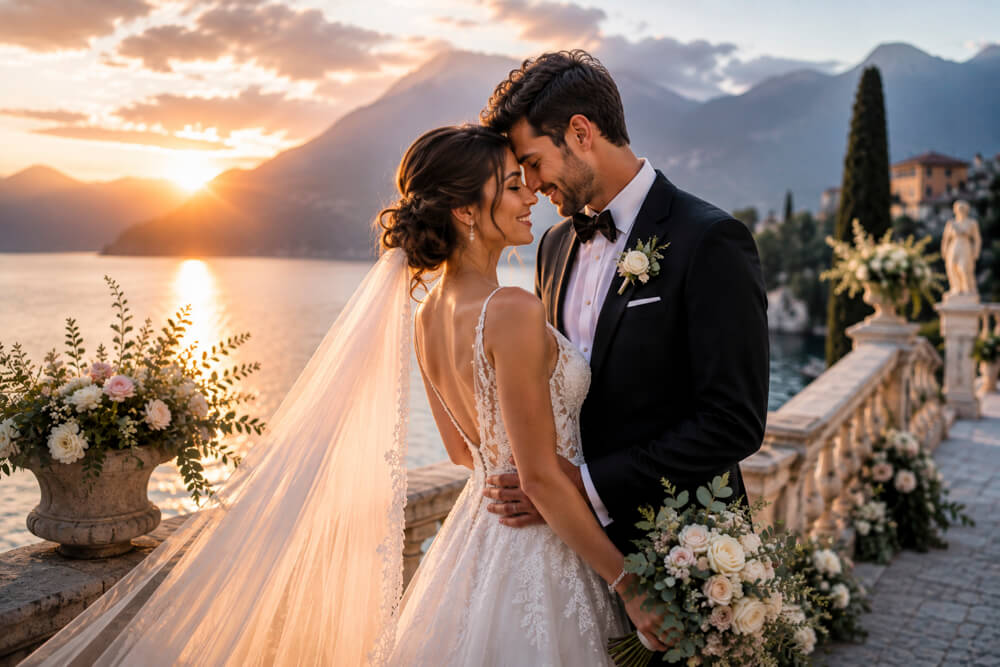
Should You Choose Colour, Black and White or a Fashionable Wedding Photography Style?
Choosing a wedding photographer is about much more than finding someone who takes good photographs.
You also need to consider how those photographs will look.
Colour grading and photo editing styles have changed dramatically over the years. At different times, photographers have favoured high contrast, desaturated colours, vintage tones, orange and teal, dark and moody editing and, more recently, soft pastel and matte finishes.
Some of these styles look fantastic when they are used well.
But there is a danger in choosing a wedding photography style simply because it is fashionable today.
Your wedding photographs aren’t just social media content.
They are photographs you may want to look at in 10, 20, 30 or even 50 years.
That changes the question completely.
The Problem With Following Wedding Photography Trends
A few years ago, pastel and matte wedding photography was everywhere.
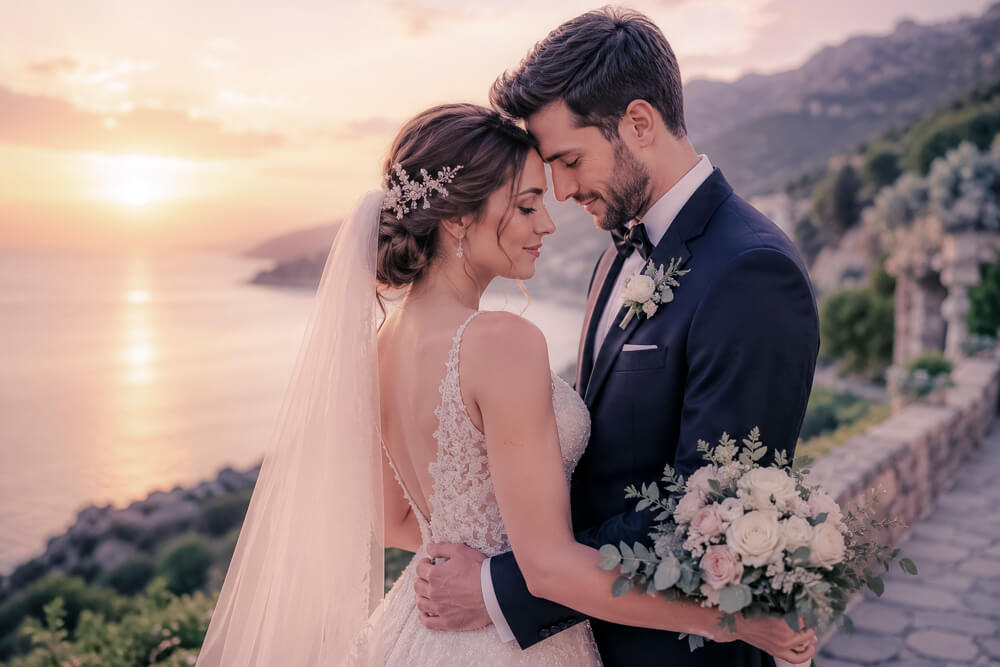
An example of a pastel matte tone
Photographs were often deliberately desaturated, with lifted blacks, muted colours and a soft, faded appearance.
At the time, this looked contemporary and fashionable.
Today, some of those images already look distinctly dated.
That’s the problem with choosing an editing style because it is currently popular.
Fashion changes.
Your wedding day doesn’t.
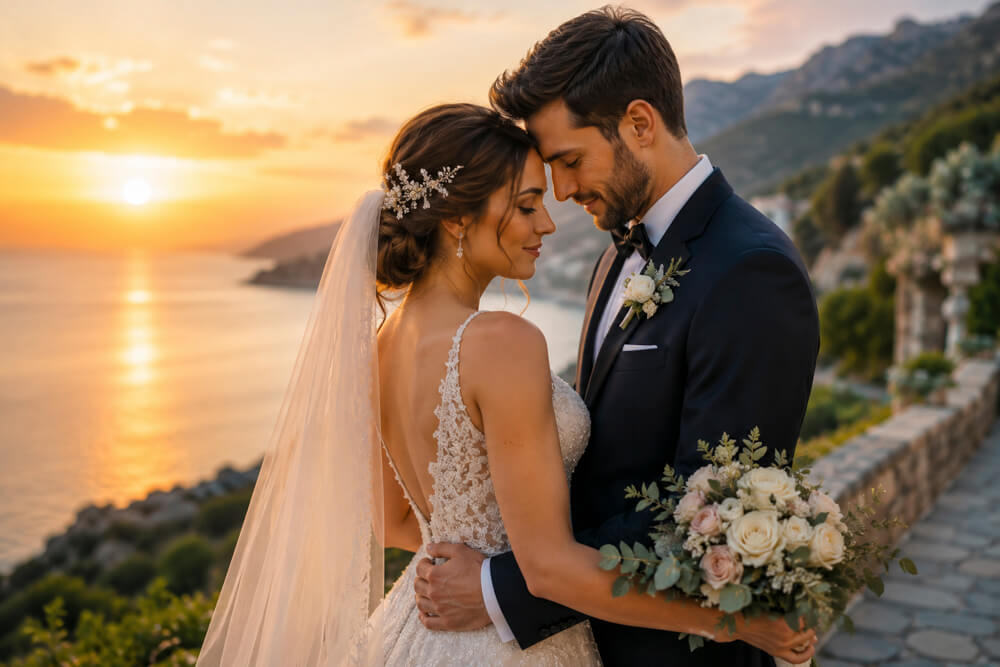
A more standard colour tone
The wedding photographs you love today may still be hanging on your walls decades from now.
That is why I generally favour an editing style that complements the photograph rather than one that imposes a fashionable look upon it.
Timeless Wedding Photography vs Trendy Editing
There is nothing wrong with photographers developing their own visual style.
In fact, a recognisable style can be an important part of choosing a professional wedding photographer.
The problem occurs when the style becomes more important than the photograph.
A timeless approach generally means:
- Natural-looking skin tones
- Realistic colours
- Controlled contrast
- Natural highlights and shadows
- Consistent colour grading
- Appropriate use of black and white
- Editing that enhances rather than overwhelms the image
This doesn’t mean photographs have to look boring.
A professional wedding photo retoucher can create beautiful, sophisticated images without making them look as though they belong to a particular year.
Colour or Black and White Wedding Photography?
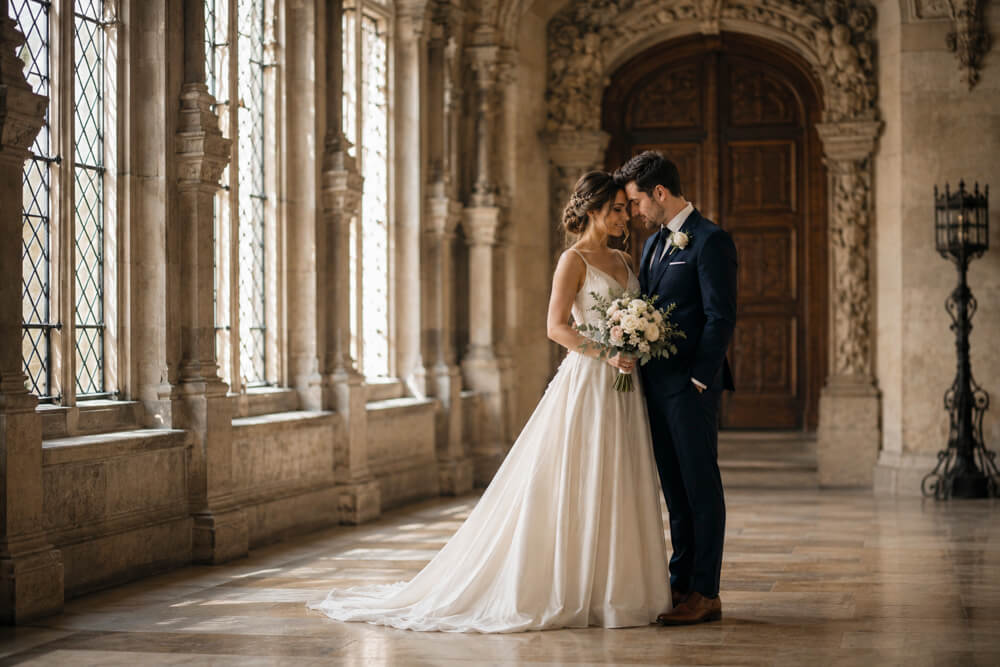
This is one area where I don’t think there is a single correct answer.
Colour and black and white serve different purposes.
Colour can preserve the atmosphere of the wedding day.
The flowers, decorations, clothing, location and evening light all contribute to the story.
Black and white can strip away distractions and concentrate attention on expression, emotion, shape and light.
A photograph of a bride and groom looking at each other might work beautifully in colour.
The same photograph could become even more powerful in black and white.
There is no reason a wedding album has to contain only one.
Why I Wouldn’t Choose One Style for Every Photograph
One of the mistakes I see with heavily stylised wedding photography is applying exactly the same treatment to every photograph.
A portrait doesn’t necessarily need the same treatment as a photograph of the wedding venue.
A dramatic black-and-white image might be perfect for a quiet emotional moment but completely inappropriate for a photograph showing colourful flowers or decorations.
Good post-production should consider the individual photograph.
The objective isn’t:
“Make every photograph look the same.”
It is:
“Make the collection of photographs feel consistent while allowing individual images to work at their best.”
The Secret About RAW Files
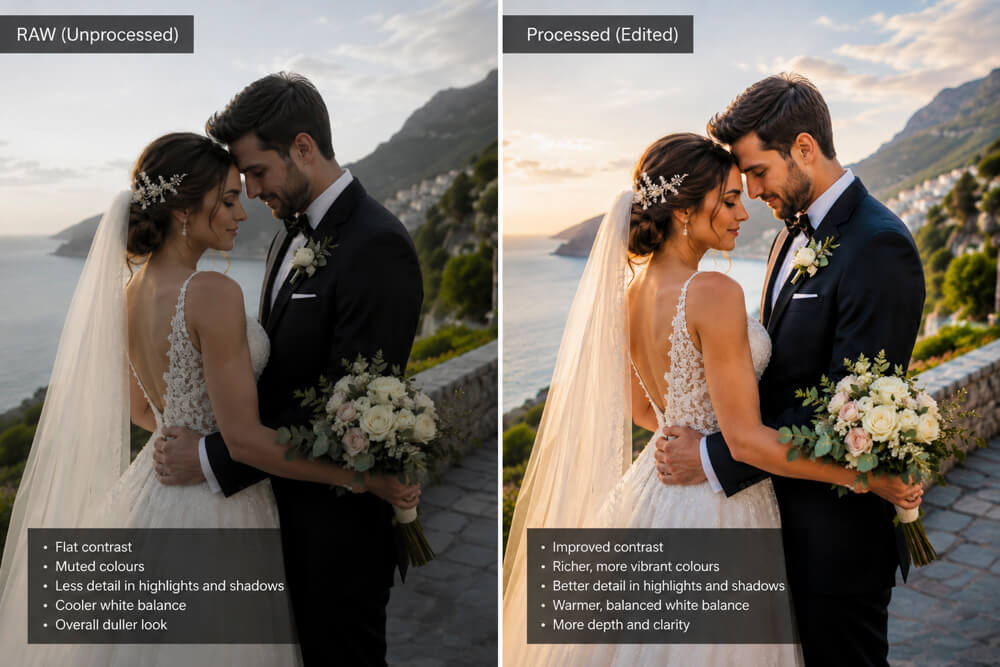
The RAW photo on the left is actually more valuable than the edited version
There is something many couples don’t realise when choosing a wedding photographer.
Professional photographers normally shoot RAW files.
A RAW file is often described as the digital equivalent of a negative.
That’s a useful comparison, although RAW files aren’t exactly the same as film negatives.
A RAW file contains the unprocessed image data recorded by the camera’s sensor. Unlike a finished JPEG, it provides considerably more flexibility when adjusting exposure, white balance, colour and other aspects of the image.
When you first open a RAW photograph, however, it can look surprisingly unimpressive.
It may appear flat, dull or lacking in contrast.
That’s normal.
The RAW file is intended to be processed.
Professional photographers use RAW files as the starting point for producing the finished photograph.
Why Photographers Don’t Usually Give You the RAW Files
Most professional wedding photographers don’t routinely include RAW files in their packages.
There are several reasons.
The RAW file isn’t normally the finished product.
It may contain the photographer’s original composition before cropping, perspective correction and other adjustments.
It may also require significant colour processing.
Professional photographers have also developed their own editing workflows and consider their finished images part of their creative work.
So when you receive your wedding photographs, you’re normally receiving the photographer’s finished interpretation of the images rather than the original camera files.
But Here’s Something Worth Asking Your Photographer
If you are planning your wedding, there is no harm in asking your wedding photographer whether RAW files can be supplied as an optional extra.
It may cost more.
Some photographers won’t offer them at all.
Others may provide them under specific conditions.
But it is worth discussing before you sign the contract.
Why?
Because your preferences may change.
Imagine that you choose a black-and-white style for your wedding because you absolutely love it at the time.
Ten years later, you might wish you had some of those photographs in colour.
If you have the original RAW files safely stored, you potentially have much more flexibility for future processing.
RAW Files Can Also Provide an Extra Layer of Protection
There is another reason I believe couples should at least ask about RAW files.
Wedding photographs are irreplaceable.
Hard drives fail.
Memory cards become corrupted.
Cloud accounts can be lost.
Files can accidentally be deleted.
A properly stored copy of the original camera files gives you another form of long-term protection.
It doesn’t replace a proper backup strategy, but it can be valuable additional insurance for photographs that can never be recreated.
Don’t Forget That RAW Files Still Need Processing
There is an important caveat.
Having RAW files doesn’t mean you automatically have future-proof finished photographs.
If you open an old RAW file in the future, you may need compatible software and the appropriate RAW-processing technology.
You may also need to make your own decisions about colour, exposure, cropping and other adjustments.
That is why I recommend couples preserve both the finished photographs supplied by their photographer and, if they have been provided, the original RAW files.
Think of it as keeping both the finished book and the original manuscript.
What Should You Look for in a Wedding Photographer?
Rather than choosing a photographer solely because you love a particular Instagram editing trend, look at their work carefully.
Ask yourself:
Do the skin tones look natural?
Do the colours still look believable?
Does their portfolio contain photographs that could still look good in twenty years?
Can they photograph in both colour and black and white?
Do they have a consistent style without every photograph looking identical?
And perhaps most importantly:
Would you still like these photographs if today’s editing trend disappeared tomorrow?
That last question is surprisingly important.
A Good Wedding Photograph Should Outlive the Trend
Wedding photography should preserve memories, not fashion trends.
There is nothing wrong with contemporary editing.
There is nothing wrong with a photographer having a distinctive visual identity.
And there is certainly nothing wrong with choosing a fashionable style if you genuinely love it.
But before committing to a heavily stylised look, remember that your wedding photographs are likely to have a much longer lifespan than the latest photography trend.
What looks fashionable today may look dated tomorrow.
Natural colour, carefully considered black and white and thoughtful professional retouching are much more likely to stand the test of time.
Frequently Asked Questions
Should wedding photos be colour or black and white?
There is no single correct choice. Colour preserves the atmosphere and details of the wedding, while black and white can emphasise emotion, expression and light. Many excellent wedding collections use both.
Are trendy wedding photography editing styles a bad idea?
Not necessarily. A fashionable style can look beautiful, but couples should understand that editing trends change. If longevity matters, consider choosing a photographer whose work still looks natural and appealing without relying heavily on a temporary trend.
Should I ask my wedding photographer for the RAW files?
It is worth asking before booking. Many photographers don’t include RAW files as standard, and some won’t supply them. If retaining them is important to you, discuss it during the negotiation and make sure the agreement is clear.
Why do RAW wedding photographs look flat?
RAW files are largely unprocessed camera data. They are designed to be processed, so they can initially appear flat or low in contrast compared with a finished JPEG. This gives the photographer considerable flexibility during post-production.
Can RAW files be useful if I want to change my wedding photographs in the future?
Potentially, yes. A RAW file gives you considerably more processing flexibility than a finished JPEG. If your tastes change—for example, if you later want a colour version of a photograph originally delivered in black and white—the RAW file can provide a valuable starting point.
Are RAW files a replacement for backing up wedding photographs?
No. RAW files are another type of original file, not a backup strategy. Ideally, couples should preserve multiple copies of their finished photographs and any original files they receive in separate locations.
The Best Wedding Photography Style Is the One That Still Looks Good in 20 Years
There is nothing wrong with experimenting.
There is nothing wrong with having a contemporary style.
But when it comes to wedding photography, I believe the safest approach is to ask yourself a simple question:
Will I still love this photograph when the current trend has disappeared?
If the answer is yes, you’ve probably made the right choice.
And if you can keep the original RAW files as well as the finished photographs, you give yourself the possibility of revisiting those memories with fresh eyes many years from now.


