Introduction: When AI Photo Editing Doesn’t Do What You Asked
Artificial intelligence has changed the way we approach photography and photo retouching.
Tasks that once required considerable time in Photoshop can now sometimes be completed in seconds. AI can remove objects, reconstruct missing areas, replace backgrounds, restore damaged photographs and even perform remarkably sophisticated alterations to people’s faces.
But there is a significant difference between being able to create something convincing and being able to create exactly what was requested.
That difference became particularly obvious during a recent photo-retouching project.
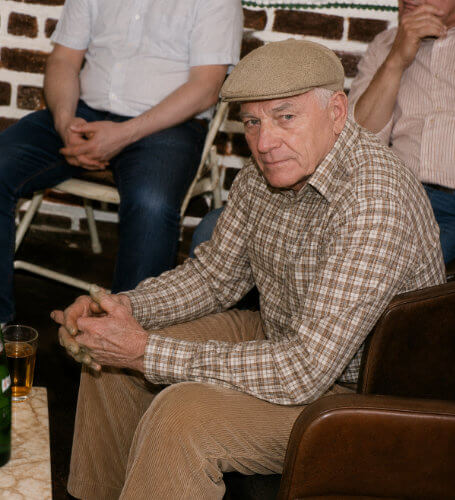
The task appeared relatively straightforward: remove the people and objects surrounding one particular person in an old photograph, reconstruct the areas of the person that were obscured, place the subject on a light background and preserve the original person exactly as photographed.
The instruction was very specific.
The person’s face, expression, direction of gaze, posture, arms, hands and clothing were not supposed to change.
What followed demonstrated both the impressive potential and the frustrating limitations of AI image editing.
The Problem With AI Editing: It Doesn’t Always Understand “Don’t Change This”
One of the biggest misconceptions about generative AI editing is that telling an AI what not to change is enough to protect those areas.
Unfortunately, that isn’t always how generative image editing works.
When an AI system reconstructs part of an image, it isn’t necessarily copying pixels from the original photograph. It may be interpreting the scene and generating what it believes should be there.
That can create a fundamental problem for professional photo retouching.
A professional retoucher may look at an image and think:
“Everything inside this area must remain exactly as it is. I only need to reconstruct the missing section.”
An AI system can instead effectively interpret the instruction as:
“Create the person and make the entire image look like this.”
Those two approaches can produce very different results.
AI Editing Failure #1: The Posture Changed
The first major problem was the person’s posture.
The original photograph clearly showed how the person was sitting. His body position, shoulders, arms and legs all had a very specific relationship to the chair.
The instruction was simply to reconstruct the parts that were hidden by other people and objects.
Instead, AI-generated versions subtly changed the posture.
The person was still recognisable as the same general subject, but the position was no longer the same.
For a normal AI-generated portrait, that might not matter.
For professional photo retouching, it matters enormously.
If the purpose of restoration or retouching is to preserve an existing photograph, changing the person’s posture means changing the photograph itself.
AI Editing Failure #2: The Face Changed
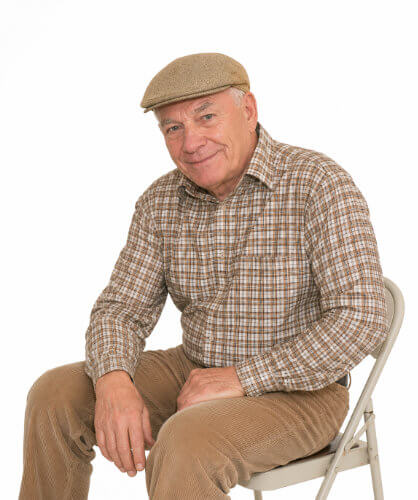
Both the posture and the facial expression had changed
The next problem was even more serious.
The person’s face was clearly visible in the original photograph, so there was absolutely no reason to reconstruct it.
Yet some versions altered the facial features.
The face became smoother, more polished and more “AI perfect”.
The problem was that it no longer looked like the original photograph.
Even more importantly, the direction of the person’s gaze changed.
The original person was not looking directly at the camera.
Some AI-generated versions made him appear to look towards the camera.
That is a tiny change technically, but a huge change photographically.
A person’s expression and direction of gaze are part of their identity within a photograph. They communicate what the person was experiencing at that exact moment.
A professional retoucher should therefore treat an existing face as something to preserve, not something to regenerate unnecessarily.
AI Editing Failure #3: The Hands Became Completely Wrong
Hands provided another excellent example of the problem.
The original photograph showed the person’s hands in a very specific position.
The hands were supplied separately as a reference specifically so that their position could be preserved.
Yet AI reconstruction can struggle with hands because they contain complicated anatomical relationships between fingers, palms, wrists and arms.
When an AI system doesn’t have enough information, it starts making predictions.
The result can look plausible at first glance while being completely wrong when compared with the original.
For a professional retoucher, that distinction is critical.
The objective isn’t:
“Make some realistic-looking hands.”
It is:
“Reproduce these exact hands in this exact position.”
Those are very different requirements.
AI Editing Failure #4: The Feet Became Almost Reptilian
The feet were perhaps the most entertaining example of what can happen when generative AI starts filling in missing anatomy.
Instead of producing natural-looking feet, some attempts produced feet that were disproportionately large and heavily textured.
They looked almost reptilian.
This is a perfect example of why AI-generated anatomy needs to be inspected rather than automatically accepted.
At normal viewing size, an AI-generated foot might initially appear acceptable.
Zoom in, however, and problems can become obvious:
- Incorrect proportions
- Strange toes
- Excessive skin texture
- Artificial wrinkles
- Incorrect joints
- Unnatural shapes
- Inconsistent lighting
- Feet that don’t match the rest of the photograph
This is particularly problematic with old photographs, where grain, softness and limited resolution can make generated detail stand out even more.
Adding detail doesn’t necessarily make a photograph better.
Sometimes it simply makes the mistake more obvious.
The Important Lesson: More Detail Doesn’t Mean More Accuracy
This is one of the most important lessons professional retouchers can take from AI editing.
AI systems often produce highly detailed results.
But detail and accuracy are not the same thing.
A generated hand can have impressive skin texture and still have the wrong fingers.
A generated foot can contain thousands of apparently realistic pores and wrinkles and still be anatomically incorrect.
A generated face can look beautifully sharp and still have a completely different expression.
Professional retouching is ultimately about accuracy and intention, not simply adding detail.
AI Can Also Produce Remarkable Results
It would be unfair, however, to turn this into an article about how AI editing is simply bad.
That isn’t my experience.
In fact, one of the reasons I find AI so interesting as a professional retoucher is that it can occasionally produce results that would have required considerably more work using traditional methods.
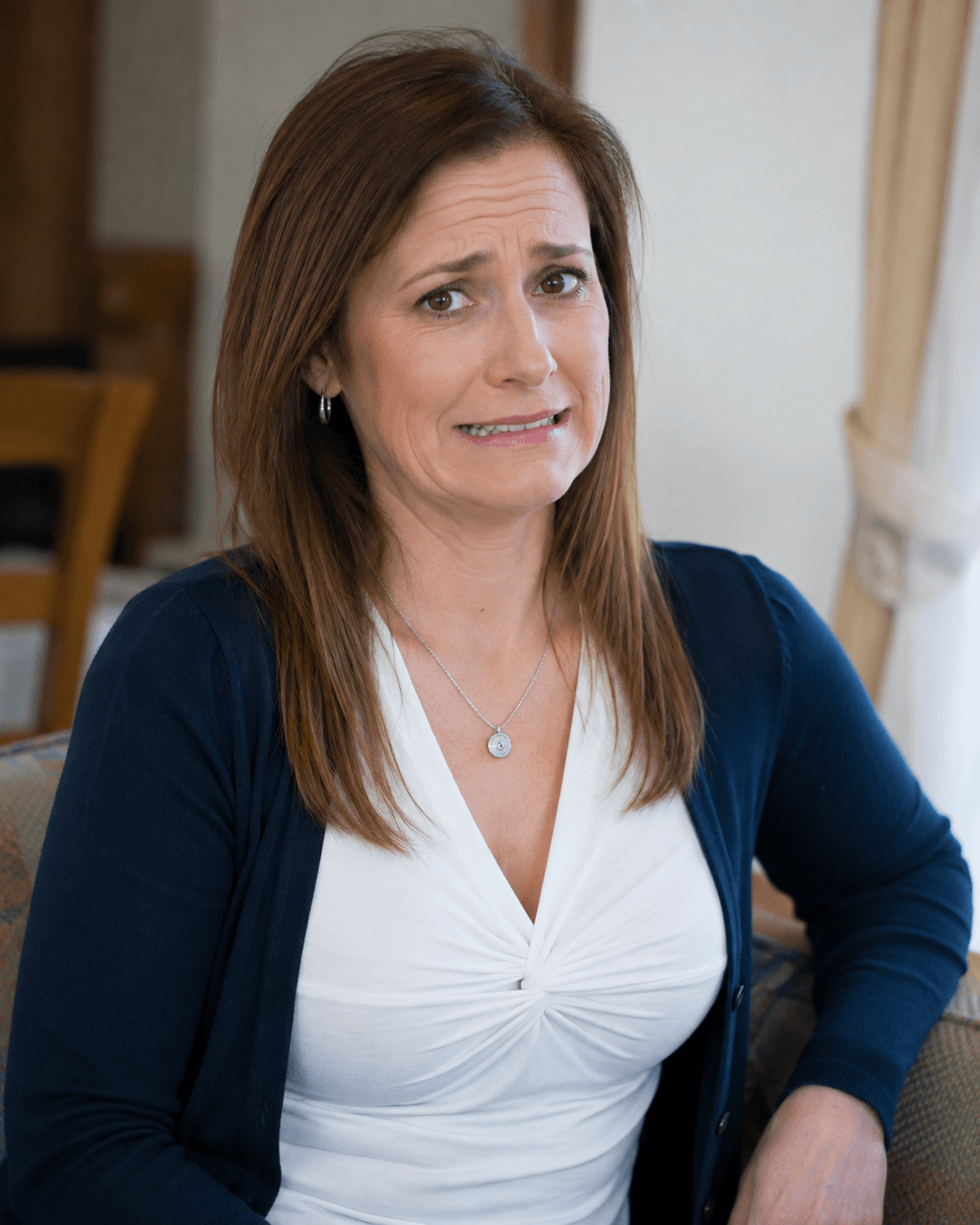
One particularly successful example involved a face-swap edit.
The result was good enough that the client responded:
“You Are a Miracle Worker! OMG, that is amazing, you so much! Helen looks fabulous 👌🫶, Thrilled to bits with Helen, thanks again 👏🙏.”
That is a very different result from the disastrous feet and altered facial expressions described above.
And that contrast is important.
The lesson isn’t that AI doesn’t work.
The lesson is that AI works extremely well for some tasks and unpredictably for others.
The Difference Between AI Generation and Professional Retouching
This is where professional retouching still has an important role.
Traditional retouching software gives the retoucher much more direct control over individual pixels, masks, layers, cloning, healing, colour and reconstruction.
A professional retoucher can decide:
- Exactly which pixels should remain untouched
- Exactly which areas need reconstruction
- Which parts of a face must be protected
- Where an object’s edge should be
- How a shadow should continue
- How clothing should follow the original posture
- How much texture should remain
- How much restoration is appropriate
AI can assist with many of those processes.
But professional judgement is still required.
This is particularly important when working with photographs of real people, where preserving identity and authenticity matters more than creating a technically impressive image.
What Professional Retouchers Can Learn From AI Editing Failures
AI failures are actually useful.
They reveal where human expertise remains particularly valuable.
The first lesson is to define the protected areas of an image.
If a face is correct, don’t regenerate it.
If the hands are correct, don’t regenerate them.
If the posture is correct, don’t regenerate it.
If the clothing is correct, don’t regenerate it.
Only generate the information that is actually missing.
The second lesson is to compare every generated result against the original.
Don’t simply ask:
“Does this look realistic?”
Ask:
“Is this exactly what was there?”
That is a much higher standard.
The third lesson is to understand that AI should be treated as a tool rather than an autonomous retoucher.
It can provide an excellent starting point, solve difficult reconstruction problems and dramatically speed up certain workflows.
But the final responsibility for the image still belongs with the person editing it.
AI Photo Editing and the Future of Professional Retouching
I don’t believe AI means the end of professional photo retouching.
I believe it is changing what professional retouching means.
Photography has always evolved alongside technology.
Digital cameras replaced film for many applications. Digital editing replaced darkroom techniques for much commercial work. Automated selections, healing tools and content-aware features changed Photoshop workflows.
AI is another stage in that evolution.
The professional retoucher of the future may spend less time performing repetitive technical tasks and more time deciding what should actually happen to an image.
That is potentially a very positive development.
The important skill isn’t simply knowing which AI button to press.
It is knowing when to use AI, when not to use it and how to recognise when the result is wrong.
AI and Photography: Why the Original Image Still Matters
The relationship between AI and photography is particularly interesting because photography captures a specific moment.
A photograph records a person’s expression, posture, environment and interaction with the people around them.
When retouching that photograph, the objective should normally be to improve or restore the image without destroying the information that makes it authentic.
This is why professional photography and professional photo retouching remain closely connected.
The photographer creates the original visual record.
The retoucher protects, restores and enhances that visual record.
AI can now assist with both sides of that process, but it doesn’t remove the need for judgement.
When AI Photo Retouching Works Best
AI is particularly useful when the task involves areas that genuinely need to be reconstructed or generated.
Examples include:
- Removing unwanted objects
- Extending backgrounds
- Reconstructing small missing areas
- Removing distractions
- Restoring damaged sections
- Creating alternative backgrounds
- Assisting with complex selections
- Performing repetitive editing tasks
It becomes more problematic when asked to recreate information that already exists and must remain identical.
Faces, hands, feet and body posture are particularly sensitive.
That doesn’t mean AI should never be used for these tasks.
It means the result needs careful human inspection.
A Hybrid Approach Is Often the Best Approach
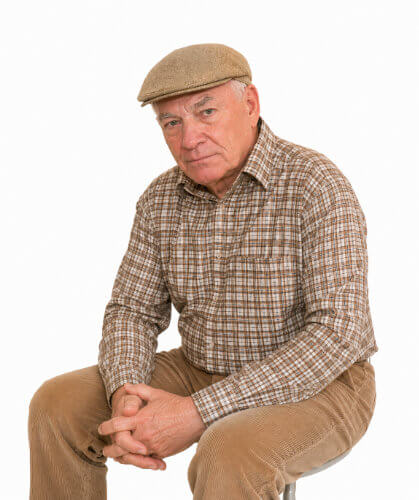
the final image sent to a very satisfied client, proving a mix of AI and traditional digital photo editing can create amazing results in a fraction of the time.
The most reliable solution may not be choosing between AI and traditional retouching.
It may be using both.
AI can be used for the parts of a project where generative reconstruction provides a genuine advantage.
Traditional retouching techniques can then be used to refine the result and protect important details.
This hybrid approach provides something neither method necessarily delivers perfectly on its own.
AI provides speed and generative capability.
Professional retouching provides control.
And when the two are combined properly, the results can be extremely impressive.
Frequently Asked Questions About AI Photo Retouching
Can AI completely replace a professional photo retoucher?
Not reliably. AI can automate many aspects of photo editing, but professional retouching still requires judgement, accuracy and quality control, particularly when preserving a person’s identity, expression, posture and anatomy.
Why does AI change faces when I don’t ask it to?
Generative AI often reconstructs parts of an image rather than simply moving existing pixels. When information around a face is altered, the system may reinterpret facial features, expressions or eye direction even when those changes weren’t requested.
Why does AI struggle with hands and feet?
Hands and feet contain complex anatomical structures and are often partially obscured in photographs. When information is missing, generative systems have to predict what should be there, which can produce incorrect proportions, fingers, textures or shapes.
Is AI photo retouching useful for old photographs?
Yes. AI can be extremely useful for restoration, reconstruction, object removal and other difficult tasks. However, old photographs often require careful human supervision because preserving the original person’s appearance is usually more important than generating a technically “perfect” replacement.
What is the best professional AI photo editing workflow?
A hybrid workflow is often the most reliable. AI can handle repetitive or difficult reconstruction tasks, while traditional retouching software and a professional retoucher can control masking, colour, detail, identity and final quality.
How can I stop AI from changing a person’s face?
Use the original face wherever possible, provide a clear reference image when necessary, restrict generative editing to the areas that actually require reconstruction and carefully compare the final result with the original.
Conclusion: AI Is a Tool, Not the Retoucher
The recent editing project that inspired this article was frustrating at times.
The brief was simple: remove unwanted people and objects, reconstruct the missing parts of the subject and place the person on a clean light background.
Instead, AI repeatedly changed things that were never supposed to change.
The posture moved.
The expression changed.
The direction of the eyes changed.
The hands changed.
And at one point the feet looked more like something from a reptile documentary than an old family photograph.
Yet the same technology had previously produced an exceptionally successful face-swap result that left a client absolutely delighted.
That contrast is perhaps the most useful lesson of all.
AI isn’t simply good or bad at photo editing.
It is very good at some things, surprisingly poor at others and capable of producing exceptional results when used correctly.
The professional retoucher’s role is therefore changing, not disappearing.
The future is likely to belong to retouchers who understand both traditional image editing and AI-assisted workflows — and, perhaps most importantly, know the difference between an image that looks good and an image that is actually correct.
AI can create possibilities. Professional retouching makes sure those possibilities are actually right.