
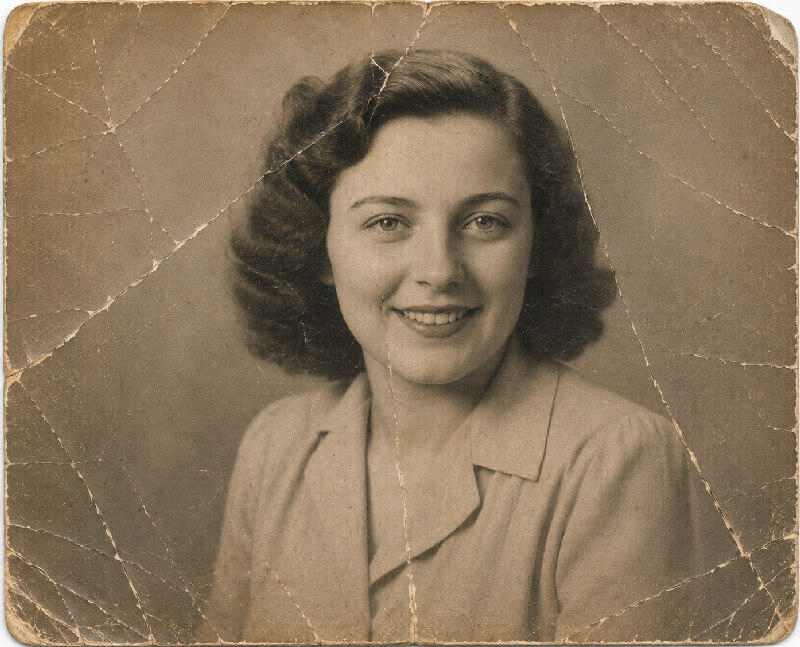
Old photographs are far more than pieces of paper—they are irreplaceable memories, family history, and often the only visual connection we have to previous generations. A professionally restored photograph can preserve those memories for decades to come, but poor restoration techniques can permanently change the character of an image.
Over the years, I have restored hundreds of photographs, from treasured family portraits to badly damaged historical images. One thing I have learnt is that successful restoration isn’t about making an old photograph look new. It’s about preserving its authenticity while carefully removing the damage caused by time.
Whether you’re considering restoring a cherished family photograph or attempting a restoration yourself, here are some of the most common mistakes I see—and how they can be avoided.
1. Over-Restoring the Photograph
One of the biggest mistakes in photo restoration is trying to make an old photograph look as though it was taken yesterday.
Many automated restoration tools smooth skin excessively, remove every wrinkle, eliminate natural film grain, and leave faces looking plastic or artificial. While the damage may disappear, so does much of the photograph’s original character.
Professional restoration should preserve:
- Natural skin texture
- Original photographic grain
- Facial characteristics
- Period authenticity
The goal isn’t perfection—it’s realism.
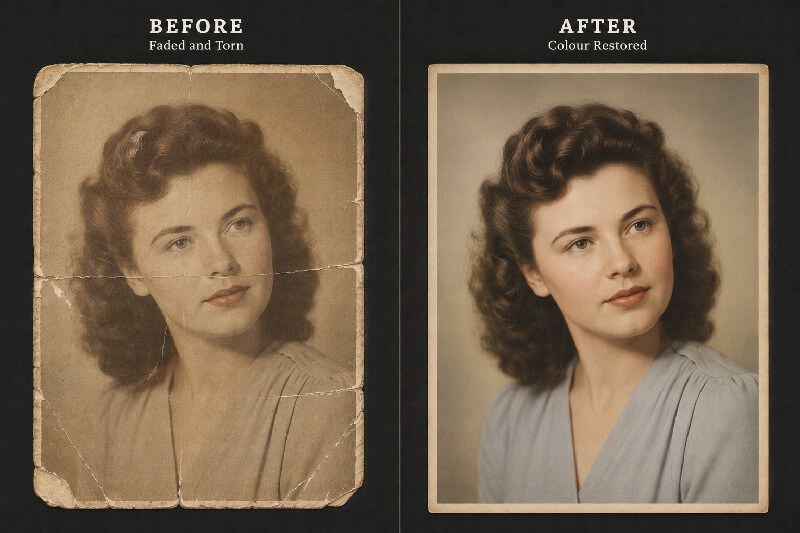
Before and after photo restoration showing professional crease repair while preserving natural facial detail.
Image Caption:
The original photograph contained heavy creases and surface damage. The professionally restored version removes the damage while preserving natural facial features, texture, and the character of the original portrait.
2. Applying Too Much Sharpening
Sharpening is one of the most overused techniques in restoration.
Used correctly, it can bring back lost detail. Used excessively, it creates halos around edges, increases noise, and makes the photograph appear harsh and unnatural.
This is particularly common with AI restoration software, which often overcompensates for lost detail.
Professional restoration uses sharpening selectively and subtly, ensuring the image remains natural while improving clarity where needed.
Before & After Example 2
Image Caption:
Rather than aggressively sharpening the entire photograph, the restored version enhances facial detail while maintaining a natural appearance and avoiding artificial halos or excessive contrast.
3. Unrealistic Colour Restoration
Colourising or restoring faded colour photographs requires far more than simply adding colour.
One of the most common mistakes is applying colours that look attractive but bear little resemblance to reality.
Common problems include:
- Skin tones that appear too orange or pink
- Bright, oversaturated clothing
- Incorrect eye colours
- Unrealistic backgrounds
- Modern colour palettes applied to historical photographs
Whenever possible, colour restoration should be based on historical research, family references, period clothing, and realistic lighting.
The aim is to create a believable image—not simply a colourful one.
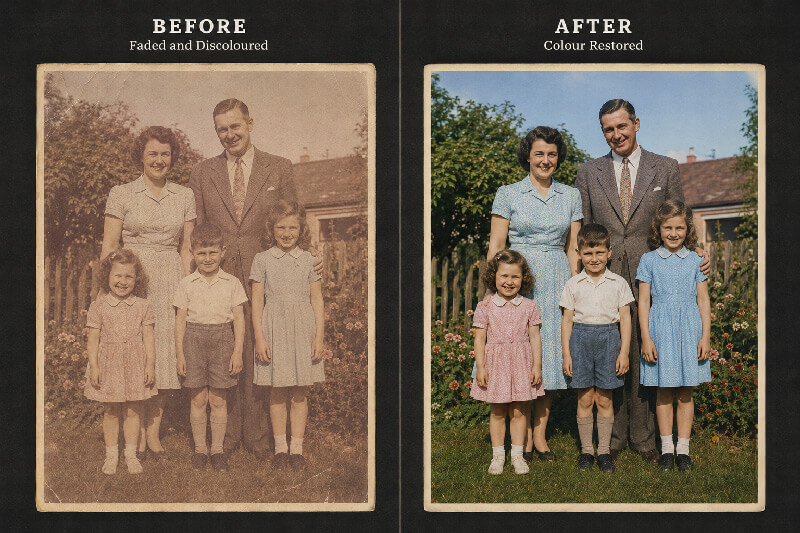
Professional restoration of an old family group photograph while maintaining the original composition.
Image Caption:
The restored image demonstrates careful colour correction, creating natural skin tones and realistic colours that respect the period in which the photograph was taken.
4. Losing Important Fine Details
Another common restoration mistake is excessive smoothing.
Hair texture, clothing fabrics, lace, embroidery, jewellery, and small facial details often disappear during aggressive restoration.
Unfortunately, once these details have been blurred away, the image can lose much of its realism.
Professional restoration focuses on removing damage while protecting fine details that give a photograph depth and authenticity.
These subtle textures are often what make an old photograph feel real.
Before & After Example 4
Image Caption:
Surface damage has been removed while preserving clothing textures, facial detail, and the subtle characteristics that maintain the authenticity of the original photograph.
5. Cropping Away Family History
Cropping is sometimes necessary, but many restorations remove far more of the original image than required.
Old family photographs often include:
- Original borders
- Studio mounts
- Decorative edges
- Background details
- Additional family members
These elements are part of the photograph’s story.
Removing them simply to create a tighter composition may unintentionally erase valuable historical context.
Whenever possible, restoration should preserve the original composition while repairing damaged areas.
Before &After Example 5
Image Caption:
The restored photograph retains the original composition and family context while carefully repairing age-related damage, allowing the image to remain historically accurate.
Why Professional Restoration Still Matters
With the rapid growth of AI restoration tools, many people assume that restoring old photographs has become as simple as pressing a button.
In reality, automated restoration often struggles with complex damage such as:
- Missing sections
- Severe tears
- Water damage
- Fire damage
- Colour fading
- Facial reconstruction
- Fine texture preservation
Professional restoration combines advanced digital techniques with artistic judgement.
Every photograph is different, and every family has different expectations. A skilled restorer understands when to repair damage, when to preserve history, and when to leave certain characteristics untouched.
The best restoration is often the one that nobody notices—it simply looks as though time has been kinder to the original photograph.
Preserving Memories for Future Generations
Every old photograph tells a story.
Whether it is a wedding portrait, a military photograph, a family gathering, or a childhood memory, these images deserve to be preserved with care and respect.
Professional restoration isn’t about changing history.
It’s about protecting it.
By avoiding the common mistakes discussed above, your treasured photographs can be restored naturally while retaining the details, emotion, and authenticity that make them so valuable.
Frequently Asked Questions
Can badly damaged photographs really be restored?
Yes. Many photographs with tears, scratches, fading, water damage, or missing sections can be restored digitally. The final result depends on the extent of the original damage, but significant improvements are often possible.
Should old photographs be made to look brand new?
Not necessarily. A professional restoration should preserve the original character of the image while removing distracting damage. The aim is a natural result rather than an artificial one.
Can faded colour photographs be restored accurately?
In many cases, yes. Colour restoration can often recover faded tones, while colourisation of black and white photographs is best achieved using historical references and careful research.
Will restoration damage my original photograph?
No. Professional digital restoration is carried out using a high-resolution scan of the original, meaning the physical photograph remains untouched.
Why choose a professional photo restorer instead of an AI app?
AI tools can be useful for simple repairs, but they often over-smooth faces, invent details, or produce unrealistic colours. A professional restorer makes careful decisions based on the photograph’s condition, historical accuracy, and your personal preferences.
Bring Your Family Photographs Back to Life
If you have treasured family photographs that have been damaged by age, sunlight, water, or everyday handling, I’d be delighted to help.
Every restoration is completed by hand with the goal of preserving the original character of your photograph—not replacing it. Whether it’s a single portrait or an entire family collection, professional restoration can ensure those memories are protected for future generations.
Get in touch today to discuss your restoration project and discover how your treasured photographs can be given a new lease of life.