
A Before-and-After Case Study: Why Human Judgment Still Matters in Photo Restoration
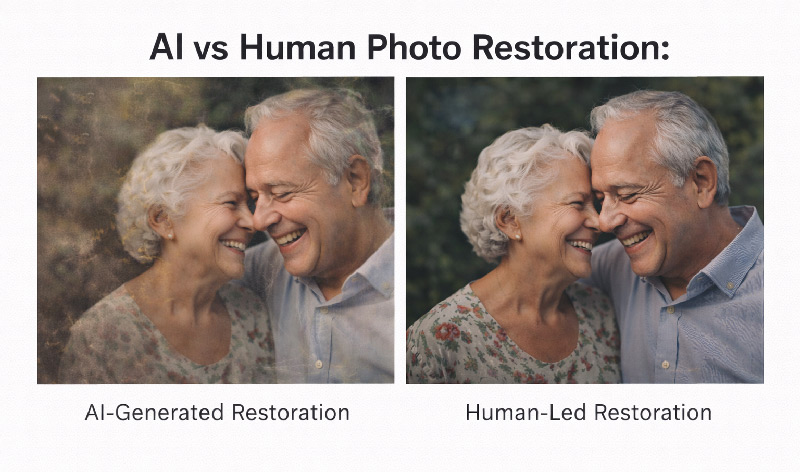
This comparison highlights AI photo restoration limitations vs human photo restoration
In recent years, AI-powered photo restoration tools have become widely available. With a few clicks, faded photographs can be sharpened, colourised, and “enhanced” automatically. At first glance, the results can look impressive.
But when you look closer — especially through a professional lens — the limitations quickly become clear.
This before-and-after visual case study shows why human judgment remains essential in photo restoration, and why automation alone cannot understand image intent, emotional context, or historical accuracy.
The Original Photograph: Context Matters
The original image in this case study was a damaged, low-contrast photograph showing clear signs of age:
-
Loss of detail in facial features
-
Uneven tonal balance
-
Physical imperfections caused by time
-
Subtle expressions that risk being overwritten by automation
To an AI system, this image is simply data to be optimised.
To a human restorer, it represents memory, identity, and intent.
That distinction changes everything.
The AI-Restored Version: Technically Enhanced, Emotionally Lost
The AI-restored version demonstrates what automation does well — and where it fails.
What AI Did Correctly
-
Increased overall sharpness
-
Boosted contrast
-
Reduced visible damage
-
Attempted facial reconstruction
At a surface level, the image appears “improved.”
Where AI Fell Short
-
Facial features were over-smoothed
-
Skin texture became unnatural
-
Expressions lost subtlety
-
Lighting no longer matched the original photograph
-
Historical accuracy was compromised
AI optimised the image for clarity, not truth.
This is a common issue with automated restoration: it prioritises visual impact over authenticity.
The Human-Restored Version: Controlled, Intentional Decisions
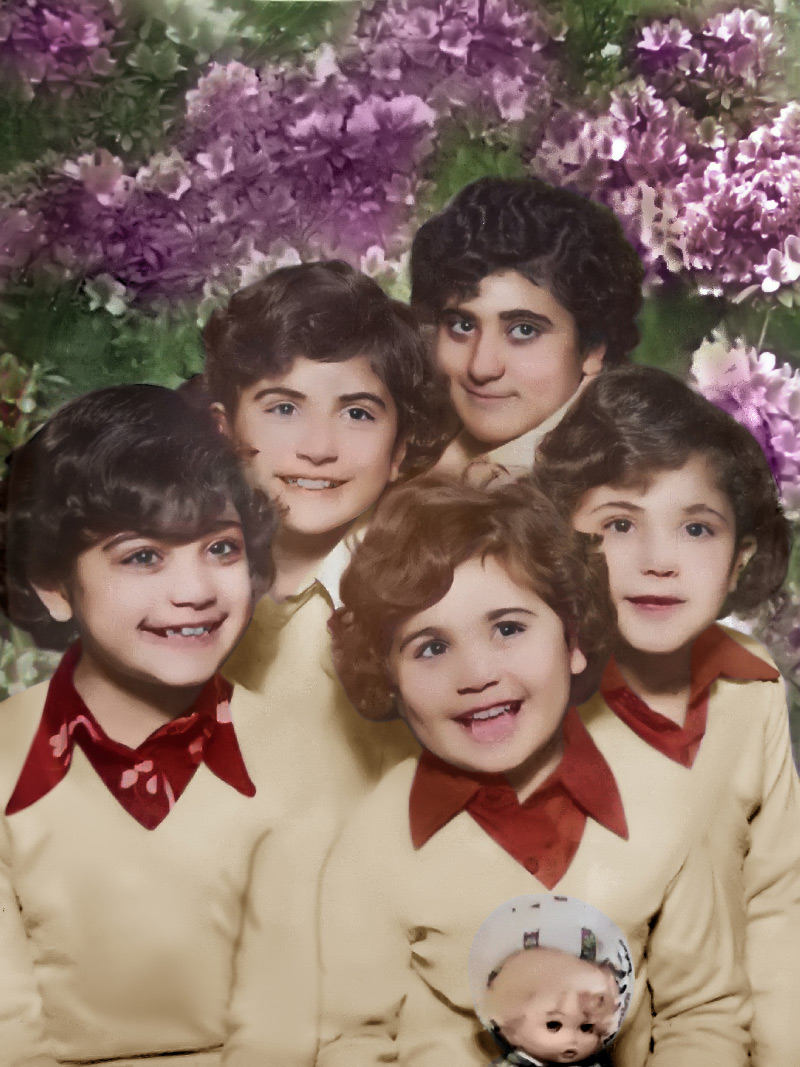
Title: A Before-and-After Case Study: Why Human Judgment Still Matters in Photo Restoration
InformationThis before-and-after visual case study shows why human judgment remains essential in photo restoration, and why automation alone cannot understand image intent, emotional context, or historical accuracy.
The human-restored version takes a fundamentally different approach.
Instead of asking, “How can this look newer?”, the question becomes:
“How can this look like itself again?”
Human Decisions That Matter
-
Restoring contrast without flattening character
-
Preserving natural skin texture
-
Respecting original lighting direction
-
Correcting damage selectively, not globally
-
Enhancing clarity while maintaining realism
Each adjustment is intentional and restrained. Nothing is added without justification.
The goal is not perfection — it’s preservation.
Why Before-and-After Comparisons Reveal the Truth
Before-and-after visuals are one of the most powerful ways to understand the difference between automation and human expertise.
They show:
-
The cost of over-processing
-
The importance of restraint
-
The role of taste and experience
-
Why “more enhancement” is not always better
AI tools apply the same logic to every image. Human restorers adapt their approach to each photograph.
That adaptability is what protects meaning.
AI Cannot Understand Image Intent
Intent is invisible to algorithms.
AI does not know:
-
Who the subject is
-
Why the photograph matters
-
How the image should feel
-
What should remain untouched
A restorer must decide what not to change as carefully as what to fix. This is where experience outweighs automation.
Restoration Is Interpretation, Not Automation
Photo restoration is not a technical process alone — it’s an interpretive one.
Two restorers can work on the same image and make different choices, both valid, because each brings:
-
Cultural awareness
-
Visual judgment
-
Historical sensitivity
-
Emotional intelligence
AI cannot replicate this. It can imitate patterns, but it cannot understand significance.
When AI Is Useful — and When It Isn’t
AI can be a helpful starting point for:
-
Rough clean-up
-
Initial damage detection
-
Speeding up repetitive tasks
But it should never be the final decision-maker in restoration work where accuracy and authenticity matter.
Human oversight is not optional — it’s essential.
Why This Matters for Clients
For clients, photo restoration is rarely about “improving” an image. It’s about reconnecting with a memory.
Over-restoration can erase the very thing that makes a photograph meaningful.
A careful, human-led approach ensures:
-
The subject still feels familiar
-
The image respects its era
-
Enhancements don’t overpower emotion
That balance cannot be automated.
Final Comparison: Enhancement vs Preservation
When you compare the AI-restored image with the human-restored version side by side, the difference becomes clear.
AI delivers speed.
Humans deliver understanding.
And in photo restoration, understanding is everything.
FREQUENTLY ASKED QUESTIONS
What is a before-and-after photo restoration case study?
It’s a visual comparison showing how an image looks before restoration and after different restoration approaches, highlighting the impact of editing decisions.
Why does AI photo restoration often look over-edited?
AI prioritises sharpness and contrast without understanding context, often smoothing skin, altering expressions, or changing lighting unnaturally.
Is AI photo restoration ever useful?
Yes, as a starting point or for basic clean-up. However, it should always be guided and refined by a human restorer for meaningful results.
Why is human judgment important in photo restoration?
Human restorers understand intent, emotion, and historical context — things AI cannot interpret or preserve accurately.
How do before-and-after images help clients choose a restorer?
They clearly show the difference between automation and thoughtful restoration, making it easier to evaluate quality and authenticity.
Can AI fully replace professional photo restoration?
No. AI lacks the interpretive ability required to restore images responsibly, especially when emotional or historical accuracy matters.