I’ve Worked With Retouching Teams Around the World, and I’m Genuinely Concerned About Their Future
For many years, photographers, agencies and businesses have relied on specialist editing companies based in countries such as India, Bangladesh and Vietnam.
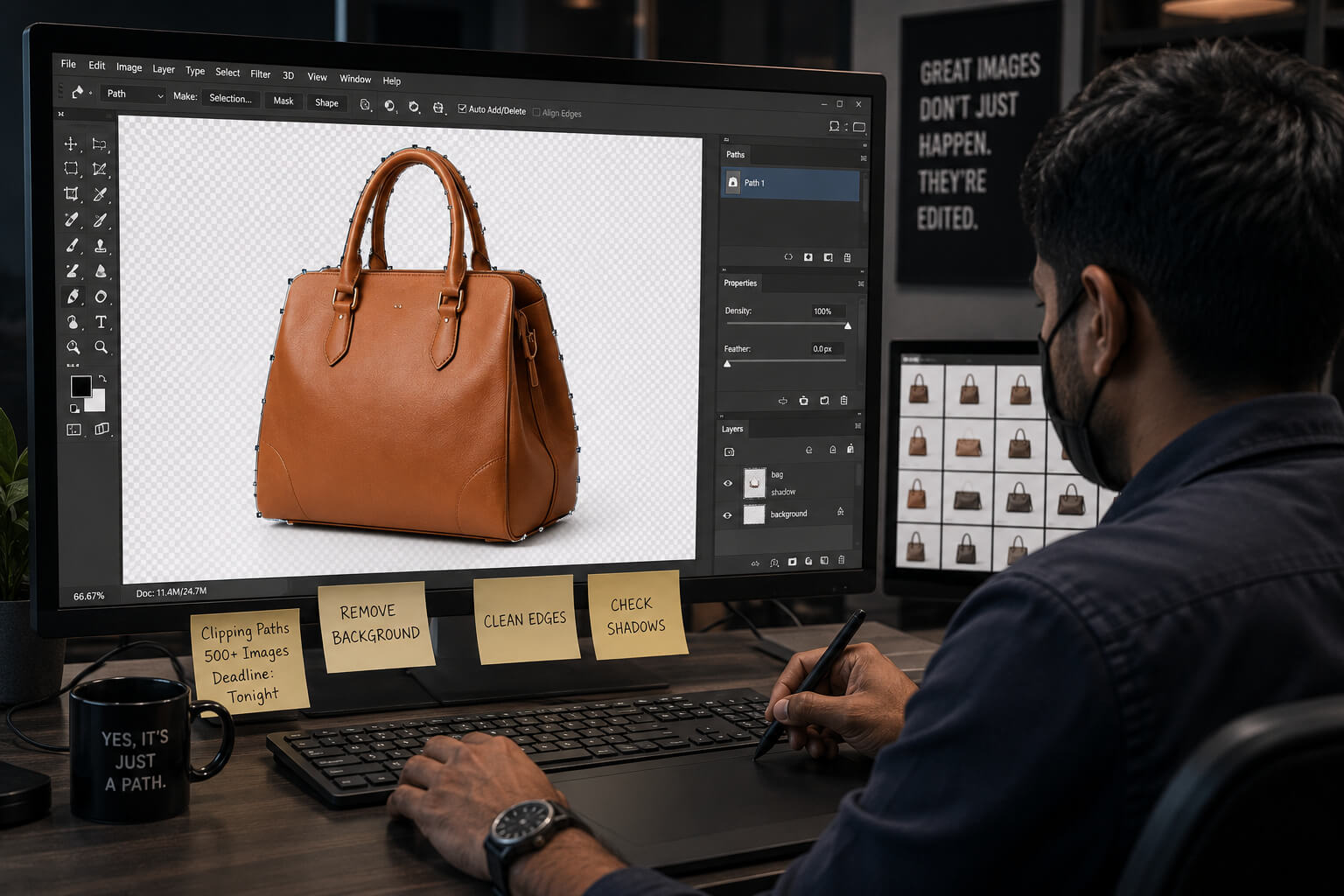
Some specialise in clipping paths.
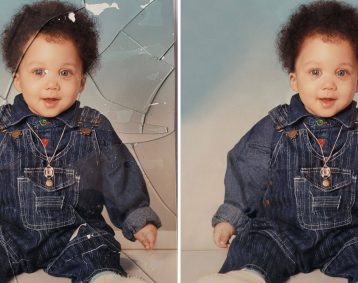
Others focus on real estate photography, portrait retouching, product photography, image restoration, colour correction and large-scale batch processing.
I’ve worked with several of these companies myself over the years, and I have developed excellent working relationships with some incredibly talented people.
They’ve helped me meet impossible deadlines, complete large projects and deliver work to clients all over the world.
Recently, though, something has changed.
The conversation is no longer centred on finding more people.
Instead, everybody seems to be asking the same question:
Can artificial intelligence do the work instead?
My Clients Are Already Asking the Question
As AI tools continue to improve at an astonishing pace, more and more clients are asking me whether I have started using artificial intelligence to reduce costs and improve efficiency.
The answer is yes.
Like many photographers and retouchers, I increasingly use AI tools for repetitive and time-consuming tasks.
That doesn’t mean I’ve stopped using human expertise.
Far from it.
But it does mean that the way we work is changing rapidly.
Tasks that once took hours can now be completed in minutes.
Sometimes even seconds.
This Isn’t an Attack on Outsourcing Companies
I want to make something very clear.
This article isn’t an attack on outsourcing companies.
In fact, it’s the exact opposite.
I’ve worked with highly skilled editors whose attention to detail is remarkable.
Some of the finest clipping specialists, restoration artists and retouchers I have encountered have come from precisely the countries people often associate with outsourcing.
My concern is not whether these professionals are talented enough.
My concern is whether the business model itself can survive unchanged.
AI Is Replacing Tasks Rather Than Entire Professions
Whenever people discuss artificial intelligence, the conversation usually becomes extremely dramatic.
People talk about entire industries disappearing overnight.
I don’t think the situation is quite that simple.
Instead, I believe AI is replacing individual tasks rather than entire professions.
The difference is extremely important.
Tasks Already Under Pressure
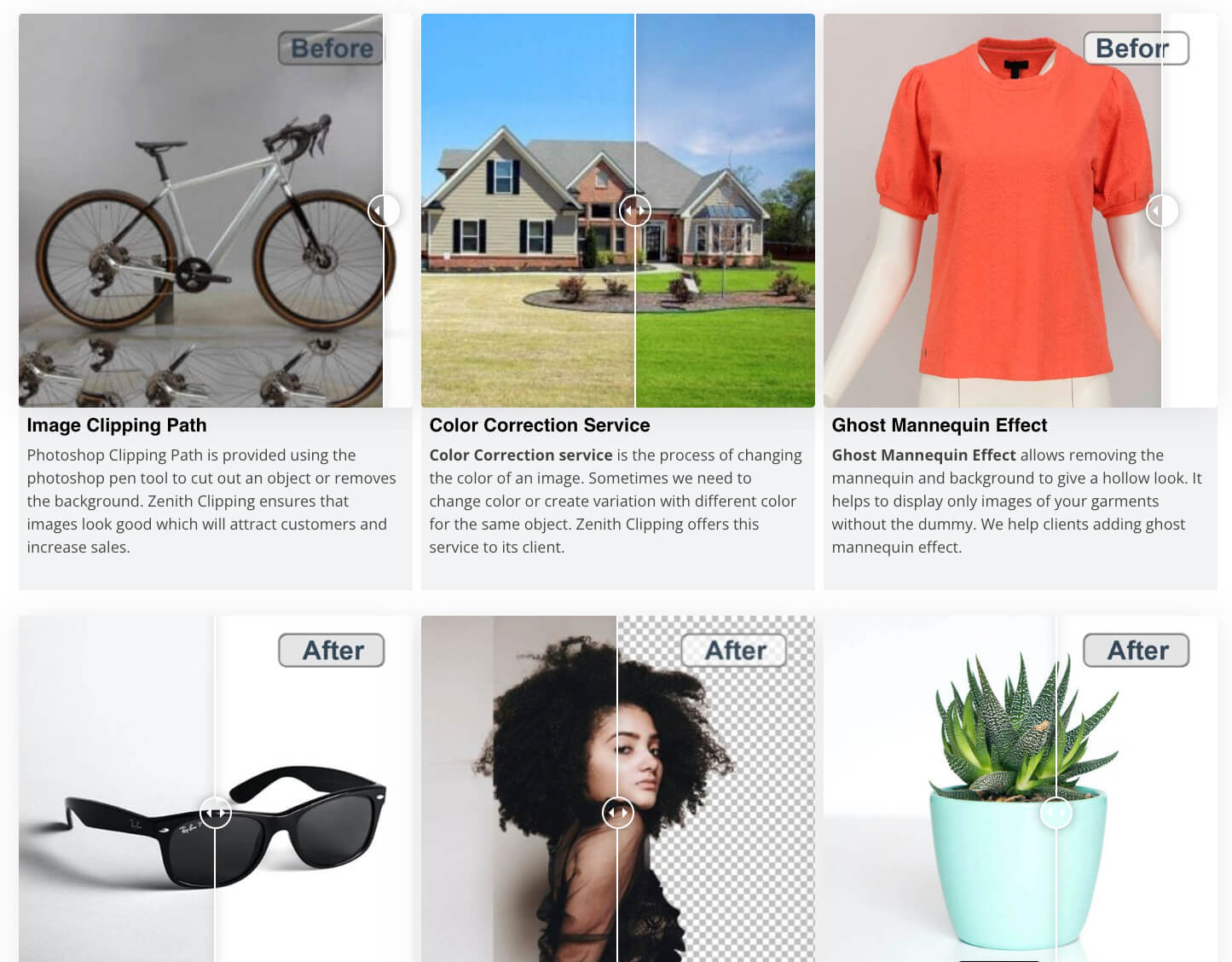
- Background removal
- Clipping paths
- Simple object removal
- Dust-spot removal
- Image resizing
- Basic colour correction
- Sky replacement
- Batch processing
- File conversion
Tasks That Are Evolving
- Product retouching
- Wedding editing
- Real estate editing
- Portrait retouching
- Colour grading
- Commercial retouching
Tasks That Still Depend Heavily Upon Human Skill
- Historical photo restoration
- Luxury product retouching
- High-end beauty work
- Complex compositing
- Creative image manipulation
- Advertising campaigns
- Colour-critical work
This distinction matters because it suggests that many jobs won’t disappear completely.
They’ll simply change.
The Labour-Cost Advantage Is Beginning to Change
For many years, outsourcing companies possessed an obvious advantage.
They could provide skilled labour at lower costs while delivering excellent results.
Artificial intelligence changes the equation.
If software can perform the first 70% or 80% of a task in a matter of seconds, labour costs suddenly become less important than efficiency, experience and quality control.
This doesn’t necessarily mean outsourcing companies will disappear.
It does mean they may need to adapt much faster than before.
How Outsourcing Companies Might Survive and Thrive
1. Become AI Specialists
The most successful companies may become experts in combining human skill with artificial intelligence.
Rather than competing against AI, they may learn to manage it.
2. Focus on Specialist Services
Basic editing work is becoming increasingly automated.
Specialist work still requires knowledge, experience and creativity.
Historical restoration, luxury retouching and advanced compositing are all examples of services that continue to depend heavily upon human expertise.
3. Become Consultants Instead of Operators
Clients increasingly need guidance.
Companies that understand colour management, workflows, printing, file preparation and archiving may find entirely new opportunities.
4. Build Proprietary Workflows
Businesses that create efficient systems combining multiple AI tools with skilled operators will have a significant advantage.
5. Emphasise Relationships
One thing artificial intelligence cannot easily replace is trust.
Clients still value reliability, communication and consistency.
These qualities will become even more important in the years ahead.
My Own Experience
Only a few years ago, I might have outsourced certain repetitive tasks.
Today, I often find myself turning to ChatGPT and other AI tools instead.
Not because I want to replace people.
Not because I don’t value their skills.
Quite simply because the technology has become incredibly capable, and my clients are increasingly asking me to reduce costs wherever possible.
That presents a difficult challenge.
On one side, there is loyalty, experience and trust.
On the other, there are changing expectations and increasing pressure to deliver work more quickly and economically.
I suspect many photographers and agency owners are facing exactly the same dilemma.
The Future May Belong to Hybrid Businesses
I don’t believe we are witnessing the end of outsourcing companies.
I believe we are witnessing the end of outsourcing companies as we know them.
The organisations that adapt quickly may become stronger than ever.
The companies that resist change may struggle.
After all, photographers, designers and agencies are all adapting to artificial intelligence.
There is no reason outsourcing companies cannot do exactly the same.
A Final Thought
I genuinely hope these businesses succeed.
I’ve spent years building relationships with talented people around the world, and I know how much skill, effort and dedication goes into their work.
Technology has always changed the way we work.
Photography changed painting.
Digital cameras changed photography.
The internet changed business.
Artificial intelligence is simply the next chapter.
The question isn’t whether change is coming.
The question is how quickly we’re willing to adapt.
And perhaps more importantly, how we can ensure that human creativity continues to play a role in the future we create.