Why AI Can’t Understand Image Intent
(And Why Human Judgment Still Matters in Photo Retouching)
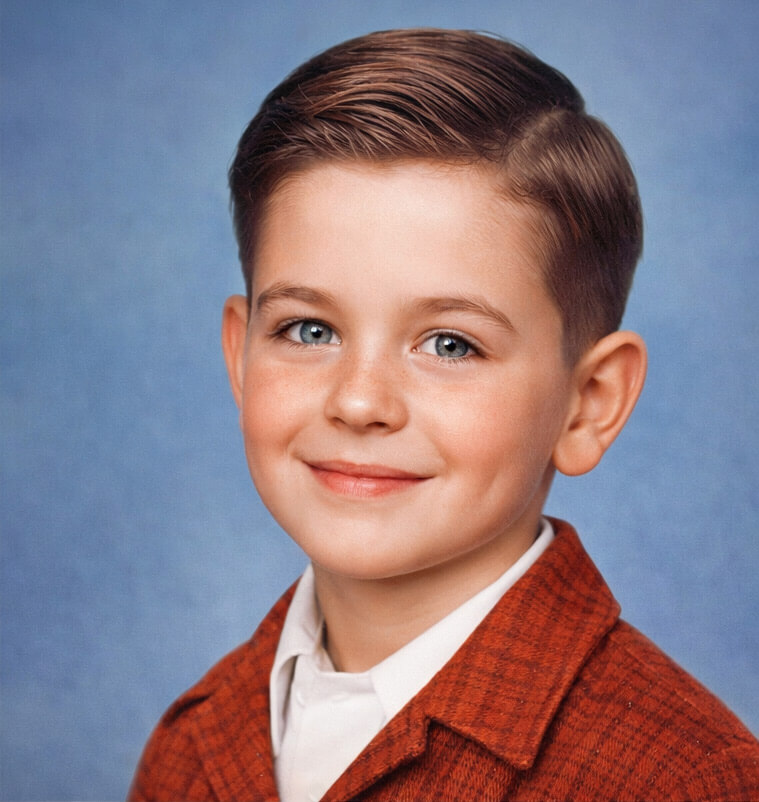
An example of an AI retouched photo which has been over edited
Artificial intelligence has become increasingly capable in the world of photo editing. With a few clicks, AI tools can smooth skin, enhance colours, remove blemishes, and even reconstruct missing details. For speed and convenience, these tools can be impressive.
However, there is a critical limitation that AI has yet to overcome: it cannot understand image intent.
In professional photo retouching and restoration, intent is everything. Without understanding why an image looks the way it does — and how it should feel — even technically “correct” edits can miss the mark entirely.
What Is Image Intent?
Image intent is the purpose behind a photograph. It’s the combination of creative, emotional, and contextual decisions that shape how an image should ultimately be presented.
Intent can include:
-
The mood the image is meant to convey
-
The era or historical context it belongs to
-
The subject’s age, character, or personality
-
The photographer’s original lighting and composition choices
-
The emotional significance the image holds for the client
These are not technical parameters. They are human considerations, shaped by experience, empathy, and visual understanding.
AI tools don’t understand intent — they analyse patterns.
Why AI Struggles With Intent-Based Decisions
AI retouching systems work by comparing an image to vast datasets and predicting what an “improved” version might look like. This approach is useful for generic enhancements, but it breaks down quickly when nuance is required.
Common issues include:
-
Over-smoothing faces that were intentionally textured
-
Brightening shadows that were meant to remain dramatic
-
“Correcting” colour tones that were part of the original atmosphere
-
Applying modern beauty standards to older or historical images
From an algorithmic perspective, these edits may be logical. From a human perspective, they often feel wrong.
AI doesn’t ask why something looks the way it does — it only asks how it can be changed.
Case Study: Human Retouching vs AI Automation
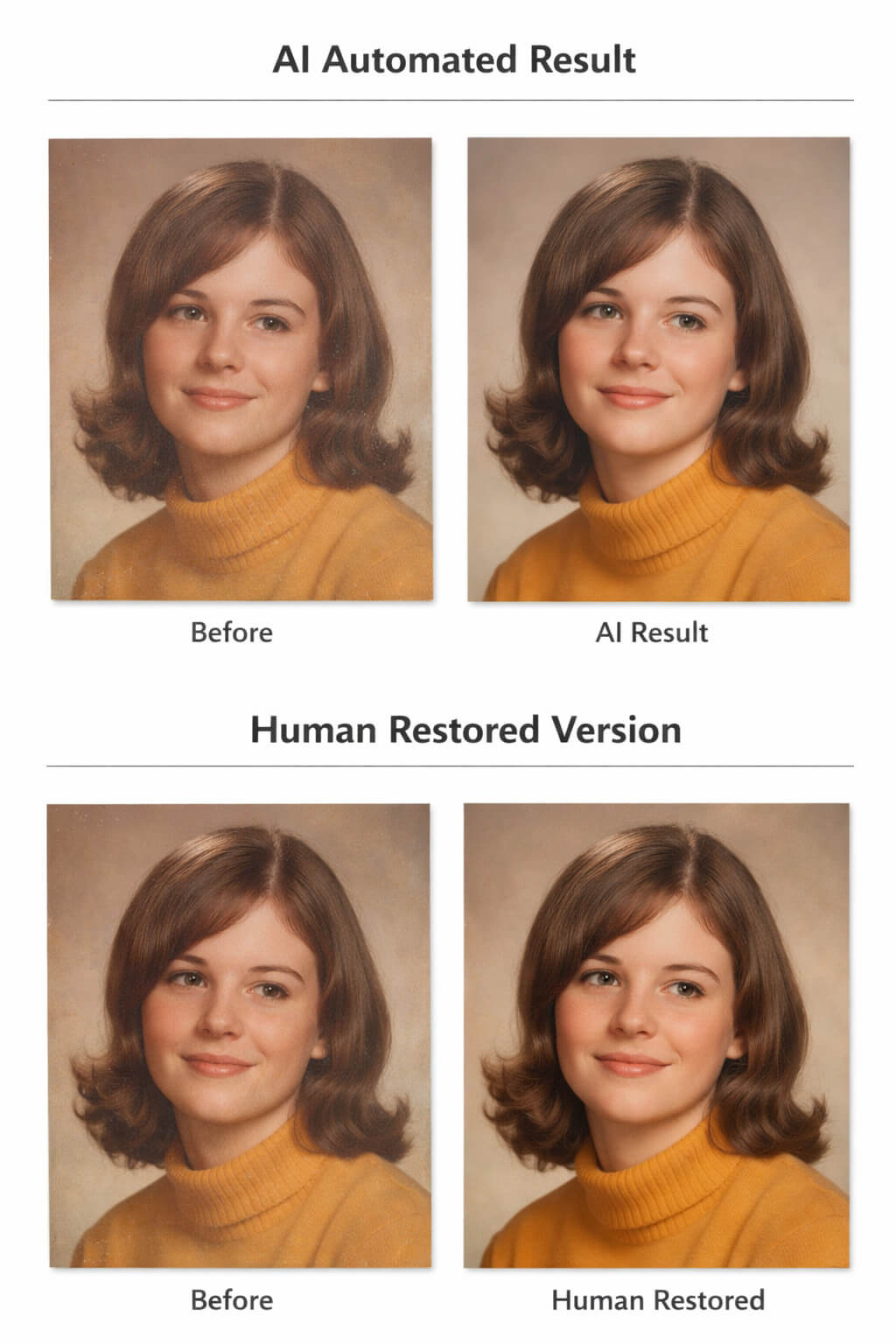
The Image
A faded portrait photograph from the late 1960s, showing a woman in her early twenties. The image had:
-
Mild colour fading
-
Soft focus typical of the era
-
Natural skin texture
-
A subdued, warm tone
The client’s request was clear:
“I want it restored, but I still want it to feel like the photograph I remember.”
AI-Driven Result
An automated AI restoration tool was applied first.
The result:
-
Skin texture was heavily smoothed
-
Facial features were subtly reshaped
-
Colours were intensified and neutralised
-
The image looked sharper — but noticeably more modern
Technically, the image was “improved”. Emotionally, it no longer felt authentic. The softness and character of the original photograph had been replaced with a polished, contemporary look that didn’t match the time period or the client’s memory.
Human-Led Restoration
The same image was then restored using manual retouching decisions.
Key human decisions included:
- Careful, human-led restoration
-
Preserving natural skin texture rather than removing it
-
Restoring colour gently while keeping the original warmth
-
Respecting the softness of the original lens and film
-
Repairing damage without over-defining features
The final result didn’t aim to make the image look new. It aimed to make it look right.
The client’s response said everything:
“This feels like her. This feels like the photograph.”
That difference — feels like — is where human judgment outperforms automation.
Experience Shapes Better Decisions
Understanding image intent comes from experience. Professionals with background as a professional photographer who has worked both behind the camera and in post-production develop a sense of how photographs are constructed and why certain choices were made.
This background allows a human retoucher to:
-
Recognise intentional shadows and highlights
-
Respect original lighting decisions
-
Restore detail without rewriting history
-
Balance enhancement with restraint
AI lacks this contextual awareness. It cannot tell whether softness is a flaw or a feature, whether grain is damage or character, or whether imperfections are part of the story.
When AI Works Best
AI does have a place in modern workflows. Used carefully, it can assist with:
-
Initial clean-up
-
Dust or scratch detection
-
Speeding up repetitive tasks
But it should remain a tool, not the decision-maker.
The moment AI is allowed to define the final look of an image without human oversight, intent is lost.
Why Image Intent Matters to Clients
For many clients, especially those seeking restoration or high-end retouching, the image is more than just a visual asset. It represents:
-
A memory
-
A person
-
A moment that cannot be recreated
In these cases, accuracy, sensitivity, and authenticity matter far more than perfection. Clients aren’t asking for an algorithmic enhancement — they’re asking for understanding.
Human Judgment Remains Essential
As AI tools continue to evolve, they will become faster and more capable. But understanding why an image should look a certain way — and knowing when to stop — remains a human skill.
Professional photo retouching isn’t about applying the strongest enhancement possible. It’s about making thoughtful decisions that respect the image, its history, and its intent.
Until AI can understand context, emotion, and memory, human-led retouching will remain essential — not in spite of technology, but because of what technology cannot replace.
Can AI understand image intent?
AI can analyse visual patterns, but it cannot understand emotional, historical, or creative intent. That requires human judgment and experience.
Is AI retouching good enough for professional work?
AI can assist with basic edits, but professional retouching still relies on human decision-making to preserve authenticity and intent.
When should AI be used in photo retouching?
AI works best as a supporting tool under human control, not as a replacement for professional judgment.